Pip: Welcome to The Midnight Scribbler, where today we’re asking the question every host has quietly panicked over: why does the dining room feel like a waiting room with better candles?
Mara: Prana Scribes has a thorough answer to that — a guide covering everything from furniture and lighting to wall decor, texture, and how to make a small space feel genuinely generous.
Pip: Let’s start with the room itself — what it takes to actually transform one.
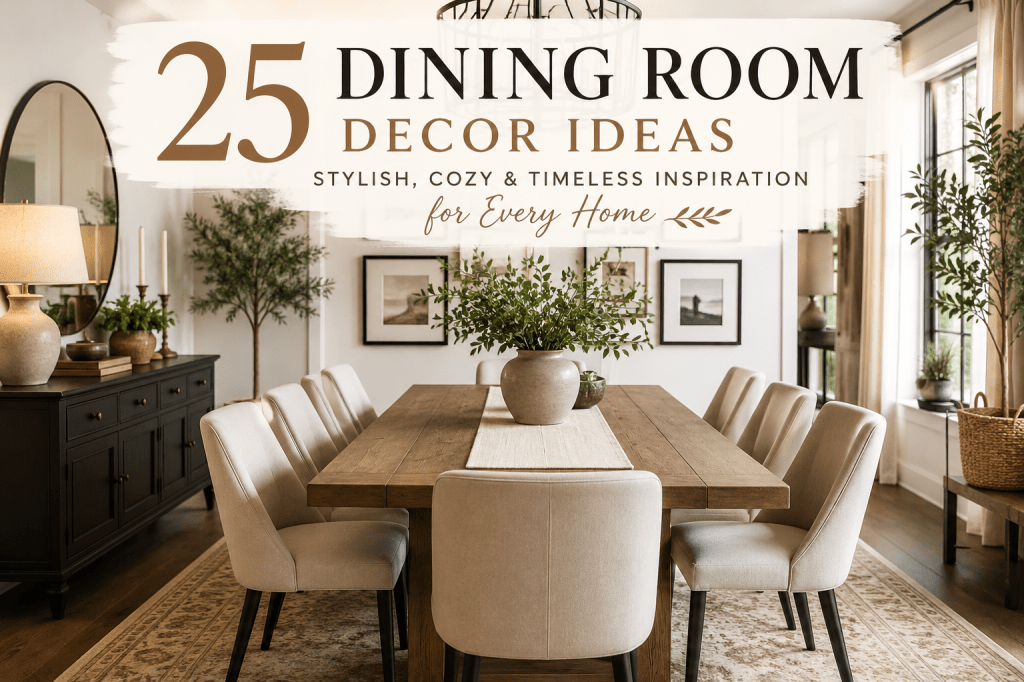
25 Ways to Make Your Dining Room Feel Like Somewhere Worth Sitting
Mara: The post opens by reframing what the dining room actually is — not just a place to eat, but the room where a household’s real life happens. The argument is that you don’t need a renovation to change how it feels; you need intention.
Pip: And the post backs that up with a direct principle right at the top — here’s how it puts it: “Creating a beautiful dining room doesn’t require a major renovation or a designer-sized budget. A few intentional updates — like choosing the right lighting, layering textures, adding stylish dining room wall decor, or selecting timeless furniture — can make the room feel brighter, warmer, and far more inviting.”
Mara: So the upshot is that the guide is structured around leverage points — the changes that move the needle most. The table comes first, and the reasoning is straightforward: it sets the scale and personality for everything else in the room.
Pip: The post recommends solid wood in oak, walnut, or reclaimed pine, and makes a case for round tables in smaller spaces specifically because they improve conversation flow, not just traffic flow. That’s a design note that doesn’t get said enough.
Mara: Lighting gets its own section, and the post is precise about it — chandelier height of thirty to thirty-six inches above the tabletop for standard ceilings, and bulbs in the two-thousand-seven-hundred to three-thousand Kelvin range for warmth. The reason that matters in practice: cool white light makes a dining room feel clinical rather than welcoming.
Pip: There’s a running theme across the wall decor, texture, and chair sections that I’d summarize as: restraint is a design choice, not a failure of imagination.
Mara: That’s exactly what the post argues. The section on texture is a good example — it recommends layering wood, linen, ceramics, woven fiber, and metal rather than introducing more colors. The formula is visual richness without visual noise.
Pip: The rug section has the single most actionable number in the whole guide: twenty-four inches of clearance beyond every side of the table, so chairs stay on the rug when pulled out. Miss that and the whole room reads as unfinished — which is apparently the decorating mistake designers notice first.
Mara: The post also covers open-concept homes specifically, noting that a centered chandelier and a large area rug are the two tools that give a dining area its own identity within a shared space. And for small rooms, the advice is to choose furniture with exposed legs and keep colors light — both create the perception of more floor.
Pip: The 2026 trends section is worth a mention: organic modern interiors, curved furniture, earthy paint colors, handmade ceramics. The post flags a few things to use sparingly too — excessive word signs and ultra-cool gray color schemes among them. Apparently the gray moment is over.
Mara: The closing checklist pulls everything together: table, chairs, rug, lighting, wall decor, greenery, storage, centerpiece, cohesive palette. The post’s final note is that the best dining room isn’t the one that’s perfectly styled — it’s the one filled with conversation and shared meals.
Pip: A sentiment that pairs well with whatever’s actually on the table.
Mara: The throughline here is that good design is mostly about proportion, restraint, and a few well-chosen materials repeated with intention.
Pip: Next time, more rooms worth gathering in — same scribbler, same hour.


Leave a Reply